
Research · Field note
Influencer outreach: how to contact creators with real context
A practical outreach workflow that turns campaign evidence into clear, personal creator messages without sounding automated.
- Published
- August 25, 2026
- Reading time
- 4 minutes
- Reviewed
- August 25, 2026
- Written by
- MovesThem Research Desk
Chapter 01
Good outreach starts before the email
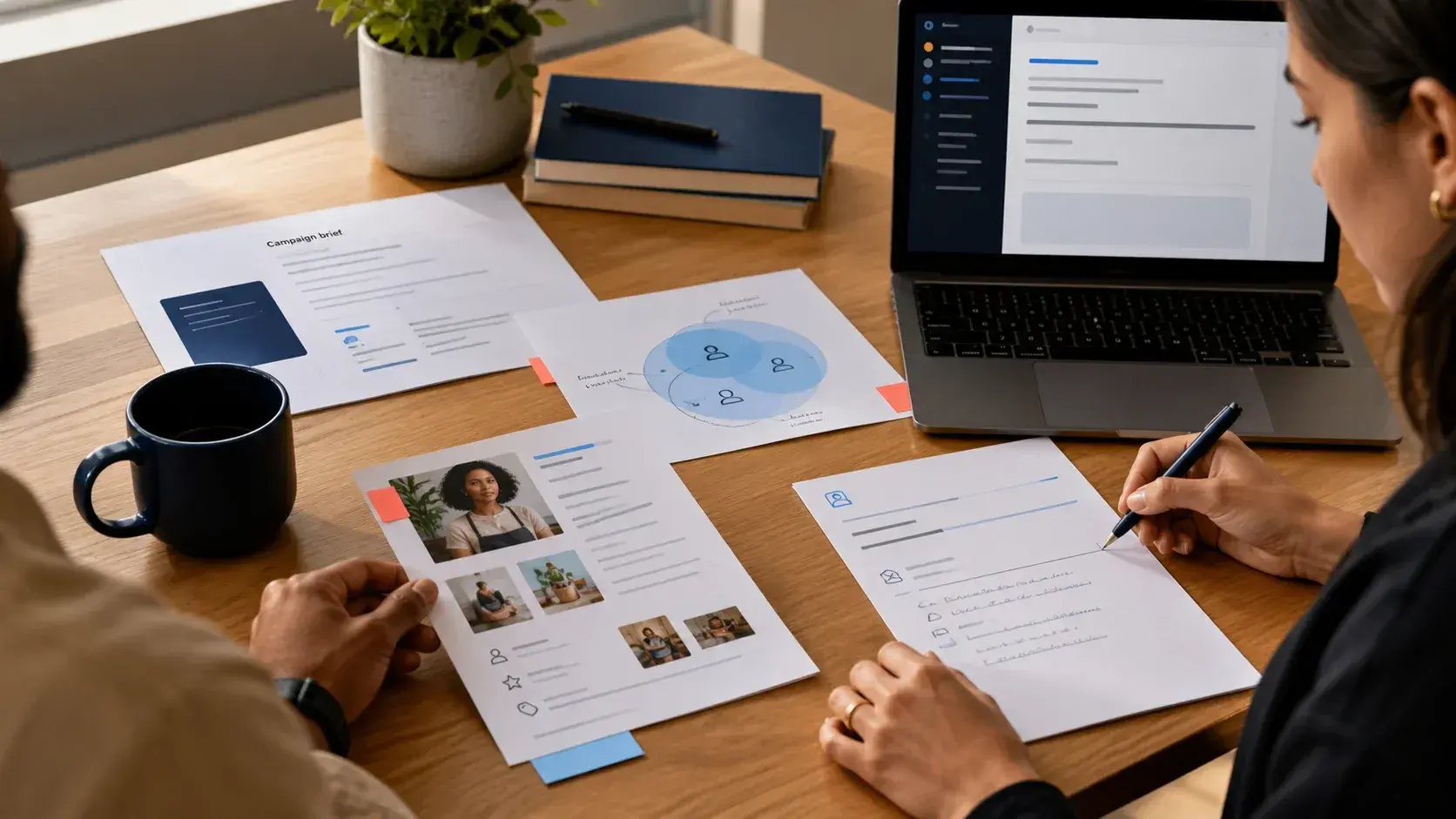
The message is not the first step. Begin with a campaign outcome, the creator role, the audience or market that matters, and the evidence that made this person worth contacting. Without that context, even polished copy becomes generic.
Treat outreach as the continuation of creator discovery. The same evidence used to advance a creator should supply the reason for the message, the proposed collaboration and the questions that still need confirmation.
Evidence checklist
Minimum context before contact
- 01The campaign outcome and creator role are clear.
- 02The creator was reviewed against current, relevant content.
- 03Audience and market assumptions are labeled as observed, estimated or unknown.
- 04The proposed deliverable, timing and decision owner are known.
- 05Contact information has a documented source and appropriate use.
Chapter 02
Choose the contact route the creator expects
Use the business channel the creator makes available for partnership inquiries. That may be a public business email, an agency contact, a platform partnership workflow or another stated route. Do not treat an inferred personal address as permission to contact someone.
YouTube Creator Partnerships, for example, presents brand inquiries with campaign and product context and leaves negotiation to the brand and creator. The useful pattern is broader than one platform: identify yourself, make the commercial purpose clear and give the recipient enough context to decide whether to engage.
Chapter 03
Build the first message in five parts
A useful first message can be short because the thinking happened earlier. Identify the sender, name the specific reason this creator fits, explain the campaign in plain language, state the practical offer and ask for one low-friction next step.
The message should still make sense if the creator ignores the compliment. Relevance comes from the connection between their work and the campaign, not from praise alone.
A useful rule“Hi [name]. I work with [brand]. Your recent work on [specific topic or format] stood out because [brief-linked reason]. We are planning [clear campaign outcome] for [audience or market] around [timing]. We would like to explore [deliverable or role], with [compensation or commercial structure] and a clear review process. Is this relevant to you, or is there someone else we should speak with?”
Chapter 04
Personalize from evidence, not scraped trivia
Use one or two observations that genuinely affected the match: a recurring topic, an explanation style, a product format, a community question or an audience-market signal. Do not insert facts merely to prove that software found them.
A strong message can explain why the creator is relevant without pretending to know their private motivations, audience intent or willingness to participate. Keep inference separate from what the creator has actually published or made available.
Chapter 05
Make the offer concrete enough to review
Share the brand, product, campaign objective, expected role, timing, compensation approach and material usage or exclusivity expectations as early as practical. If an important term is undecided, say that it is open rather than hiding it behind a vague invitation to collaborate.
Disclosure and platform requirements belong in the campaign workflow, not as an afterthought. For work that can affect U.S. consumers, the Federal Trade Commission says material relationships should be disclosed clearly. Other markets and platforms have their own requirements, so the accountable campaign owner should identify which rules apply.
Chapter 06
Use AI to prepare context, not impersonate judgment
AI can structure the brief, summarize approved evidence, suggest a message angle and draft variants. A human should still confirm that the cited creator evidence is current, the offer is accurate and the tone reflects a real reason to contact this person.
Keep the source evidence beside the draft. If the message cannot be traced back to the brief and creator review, automation has made the work faster without making it better.
Chapter 07
Follow up with restraint and new information
A follow-up should reduce ambiguity or add useful context, not simply repeat the first request. Confirm timing, answer a likely question or close the loop. Repeated messages without new value can damage both deliverability and the future relationship.
For email, technical hygiene matters alongside copy. Google documents authentication, sender-identity, spam-rate and unsubscribe requirements for messages to Gmail accounts. The exact obligations depend on sending volume and message type, but the principle is stable: respect the inbox and make the sender and intent clear.
Chapter 08
Keep every reply connected to the campaign record
Record the message version, send date, response, questions, commercial terms and next owner. This prevents duplicate outreach and lets another teammate understand the relationship without reading a disconnected inbox thread.
The goal is not the highest possible sending volume. It is a creator conversation that begins with enough relevance and clarity to move toward a good decision.
Evidence checklist
Pre-send review
- 01The sender, brand and commercial intent are unmistakable.
- 02The creator-specific reason is supported by visible evidence.
- 03The campaign outcome and proposed role are easy to understand.
- 04Compensation, timing and major constraints are stated or labeled open.
- 05No private inference is presented as fact.
- 06The requested next step is small and specific.
- 07Follow-up and stop conditions are defined.
- 08The message and reply will remain attached to the campaign record.
Accountability
A byline with a visible remit.
These are disclosed organizational desks, not invented experts. Each carries a defined research responsibility and editorial method.
Written by
RDMovesThem Research Desk
Editorial governance and evidence review
The accountable editorial desk behind MovesThem field notes, research frameworks and the standards used to keep creator recommendations reviewable.
View remit and methodReviewed by
T&MovesThem Trust & Safety Desk
Creator vetting and brand-suitability review
Focused on proportionate creator risk review, commercial conflicts, evidence gaps and explainable vetting for real campaign decisions.
View remit and methodSource record
What supports this note.
A source is listed only when it supports a factual definition or method used here. First-party working methods are labeled separately from external primary sources.
- 01Open source
MovesThem evidence and decision documentation method
MovesThem Research Desk · First-party methodology · Accessed August 24, 2026
Defines the internal working principles used to separate observations, interpretation, unknowns and review ownership.
- 02Open source
Email sender guidelines
Google Gmail Help · Primary source · Accessed August 25, 2026
Documents authentication, sender identity, spam-rate and unsubscribe requirements that can affect commercial email delivery.
- 03Open source
Get started with YouTube Creator Partnerships
YouTube Help · Primary source · Accessed August 25, 2026
Describes creator-facing brand inquiries, campaign context and direct negotiation inside YouTube Creator Partnerships.
- 04Open source
Disclosures 101 for Social Media Influencers
U.S. Federal Trade Commission · Primary source · Accessed August 24, 2026
Supports review of material brand relationships and clear disclosure practices for work that can affect U.S. consumers.
Revision record
Meaningful changes.
August 25, 2026
Initial substantive editorial review recorded.
Continue the research